
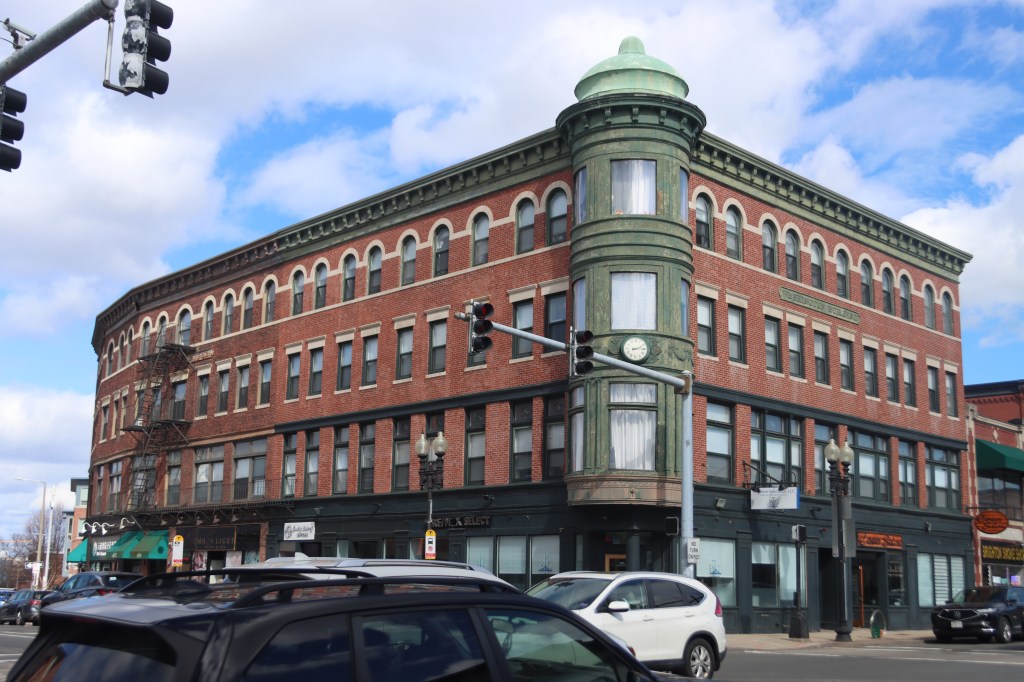
The Greater Boston real estate market is no longer moving as a single system. In 2026, a clear divide has emerged between affordable housing and market-rate multifamily—each driven by different forces, risks, and opportunities.
Understanding this split is critical for investors and developers navigating one of the most supply-constrained housing markets in the country.
Two Different Demand Systems
At a foundational level, affordable housing and market-rate housing operate under fundamentally different demand structures.
Affordable housing demand in Boston is structurally high and persistent. It is driven by income constraints and a long-standing supply shortage. Waiting lists often extend for years, and occupancy levels typically approach full capacity. As market rents continue to rise faster than wages, more households fall into income-qualified brackets, further intensifying demand.
Research from Boston Indicators highlights this growing affordability gap.
Market-rate housing, by contrast, is cyclical and more responsive to economic conditions. Demand is influenced by interest rates, job growth, renter mobility, and pricing relative to competing supply. While still strong in Boston, demand in this segment has become noticeably more price-sensitive and selective in 2026.
Stability vs. Normalization
Affordable housing remains one of the most stable asset classes in Boston real estate. Rent levels are regulated, turnover is low, and income streams are predictable. Supply, however, is slow to expand due to reliance on funding programs such as:
HUD →
This creates a consistent imbalance: demand far exceeds available units.
Market-rate housing, on the other hand, is undergoing a normalization phase. Following several years of rapid rent growth, many Boston submarkets are now seeing:
Rent stabilization or slight softening
Increased inventory from recent development pipelines
Higher Days on Market
Greater negotiation flexibility
Data from the Harvard Joint Center for Housing Studies supports this shift:
At the same time, interest rates in the 6% range have slowed new construction starts, setting up potential supply constraints in the coming years.
Policy Is Reshaping the Market
Housing supply in Massachusetts is increasingly influenced by policy.
The MBTA Communities Act is a major driver of change, requiring municipalities to allow more multifamily housing near transit
This law is gradually unlocking new development opportunities across Greater Boston, particularly in areas that were previously limited to low-density housing.
At the same time, zoning reform debates—such as the return of triple-deckers and “missing middle housing”—are reshaping how density is introduced into established neighborhoods.
Where the Real Opportunity Is: The Overlap
The most important shift in 2026 is not within each segment individually, but where they intersect.
In many Boston submarkets, market-rate and affordable housing dynamics are converging into workforce housing:
Rent ceilings are becoming real
Tenants are increasingly price-sensitive
Value-add strategies must be grounded in realistic rent growth
This convergence is creating the strongest investment opportunities in the region.
Top 3 Markets to Watch in 2026
1.- Dorchester — The Core Value-Add Market
Dorchester remains the most compelling multifamily submarket in Boston.
Strong demand across affordable, workforce, and market-rate segments
Entry pricing below core Boston neighborhoods
High demand for 2–3 bedroom units
Significant triple-decker and small multifamily inventory
Both institutional and private capital are active here, targeting preservation and value-add opportunities.
2.- Quincy — Transit-Oriented Growth
Quincy is emerging as a major growth corridor.
Red Line access to Boston
Large-scale redevelopment in Quincy Center
Strong renter demand driven by affordability relative to Boston
This market is ideal for mid-scale multifamily development and mixed-income projects.
3.- Malden — Workforce Housing Expansion
Malden continues to attract renters priced out of Cambridge and Somerville.
Growing renter population
Transit access and urban density
More accessible entry pricing
This is a strong market for workforce housing and small multifamily investments.
Strategic Takeaways for Investors and Developers
The Boston housing market in 2026 is defined by divergence and convergence at the same time.
Affordable housing = stability and long-term demand
Market-rate housing = normalization and pricing discipline
Workforce housing = where the strongest opportunities exist
The most successful strategies today are not about timing the market, but about positioning within it.
Final Thought
Boston is no longer one market—it is multiple layers of demand moving at different speeds.
The real opportunity isn’t choosing between affordable and market-rate housing. It’s understanding where they overlap—and investing accordingly.


Leave a Reply